
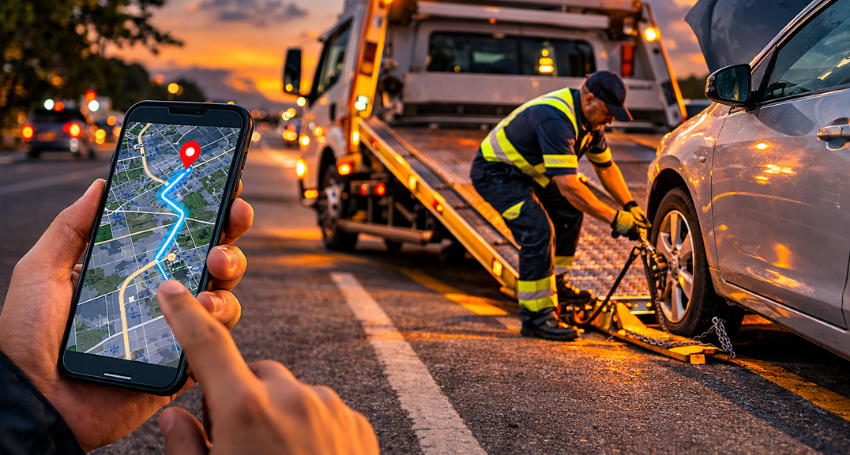
When a vehicle suddenly breaks down on the road, drivers expect fast and how does technology enhance emergency towing services help. Emergency towing services play a critical role in getting vehicles off the road safely and assisting drivers during stressful situations. In recent years, technology has significantly improved how towing companies operate. From GPS tracking to digital dispatch systems, modern tools allow towing providers to respond faster, communicate better, and deliver safer roadside assistance in this blog
For companies like Team Smith Logistics, technology helps streamline towing operations and ensures drivers receive help as quickly and efficiently as possible.
The Growing Role of Technology in Emergency Towing
Traditional towing services relied heavily on phone calls, manual scheduling, and limited vehicle tracking. This often caused delays, confusion about vehicle locations, and inefficient use of towing resources.
Today, technology has transformed emergency towing into a more organized and responsive service. Digital systems allow towing companies to track vehicles in real time, assign jobs instantly, and communicate clearly with both drivers and dispatch teams. These advancements improve response times and enhance the overall experience for drivers who need roadside help.
GPS Tracking for Faster Location Identification
One of the most important technologies used in emergency towing is GPS tracking. When drivers request assistance, GPS allows dispatch teams to identify their exact location quickly.
This technology provides several benefits:
- Accurate vehicle location identification
- Faster dispatch of the nearest tow truck
- Real-time navigation for drivers
- Reduced waiting times for stranded motorists
Instead of relying on drivers to describe their location, GPS provides precise coordinates. This makes it much easier for towing companies to locate vehicles even in unfamiliar areas or on highways.
Digital Dispatch Systems Improve Response Times
Another major improvement in the towing industry is the use of digital dispatch systems. These platforms allow towing companies to manage requests more efficiently.
When a service request comes in, the system automatically:
- Receives the request from the customer
- Identifies available tow trucks nearby
- Assigns the job to the closest driver
- Sends route directions directly to the driver
This process significantly reduces delays that previously occurred when dispatchers manually assigned towing jobs. As a result, drivers receive faster assistance during emergencies.
Mobile Apps Simplify Roadside Assistance Requests
Many modern towing companies now offer mobile-friendly request systems or apps that allow drivers to request help quickly.
With these tools, drivers can:
- Request towing services instantly
- Share their exact GPS location
- Track the arrival of the tow truck
- Communicate with the service provider
This level of convenience improves the overall roadside assistance experience. Instead of waiting for updates, drivers can see when help is on the way and stay informed throughout the process.
Fleet Management Technology for Efficient Operations
Towing companies often operate multiple vehicles across large service areas. Managing these fleets efficiently is essential for maintaining quick response times.
Fleet management software helps companies monitor and coordinate their towing vehicles. These systems allow dispatchers to:
- Track the location of each tow truck
- Monitor driver activity
- Optimize routes to avoid traffic delays
- Ensure coverage across service regions
By using fleet management technology, towing companies can maximize efficiency and ensure that drivers receive help as quickly as possible.
Advanced Tow Truck Equipment Enhances Safety
Technology improvements are not limited to software. Modern tow trucks are equipped with advanced towing equipment designed to handle vehicles safely and efficiently.
Examples include:
- Hydraulic lifting systems
- Automatic wheel-lift technology
- Stabilization tools that protect vehicles during transport
- Improved winching equipment for difficult recoveries
These advancements allow towing professionals to handle a wide range of roadside situations while reducing the risk of damage to vehicles.
Vehicle Diagnostic Tools Help Identify Problems
Some roadside assistance teams use digital diagnostic tools that connect to a vehicle’s onboard system. These tools help technicians identify mechanical issues before towing begins.
Common problems detected through diagnostics include:
- Battery failure
- Electrical system malfunctions
- Engine warning codes
- Sensor issues
In some cases, technicians may be able to solve the problem immediately without needing a tow. This saves time for drivers and reduces unnecessary towing.
Real-Time Communication Improves Coordination
Clear communication is essential during roadside emergencies. Technology allows dispatch teams, tow truck drivers, and customers to stay connected throughout the process.
Modern communication systems allow for:
- Instant updates between drivers and dispatchers
- Accurate estimated arrival times
- Improved coordination between service teams
- Faster responses to changing road conditions
This real-time communication helps ensure smoother operations and better customer service.
Benefits of Technology for Drivers
The integration of technology into emergency towing services provides several advantages for drivers.
These include:
- Faster response times during emergencies
- More accurate vehicle location tracking
- Improved safety during roadside recovery
- Real-time updates about service arrival
- Better communication with service providers
When drivers experience unexpected breakdowns, these benefits help reduce stress and ensure that assistance arrives quickly.
The Future of Technology in Towing Services
Technology will continue to shape the future of the towing industry. Emerging innovations are expected to further improve efficiency and reliability.
Some potential developments include:
- AI-powered dispatch systems
- Predictive roadside assistance based on vehicle data
- Automated route optimization
- Enhanced vehicle diagnostics tools
As these technologies evolve, emergency towing services will become even faster, smarter, and more responsive.
Conclusion
Technology has transformed emergency towing services into a faster, safer, and more efficient operation. Tools such as GPS tracking, digital dispatch systems, fleet management platforms, and advanced towing equipment allow service providers to respond quickly when drivers need help.
For drivers facing unexpected breakdowns, these technological advancements mean shorter wait times, better communication, and more reliable roadside support. As the towing industry continues to adopt innovative solutions, emergency assistance will become even more dependable for motorists everywhere. Contact us for more information